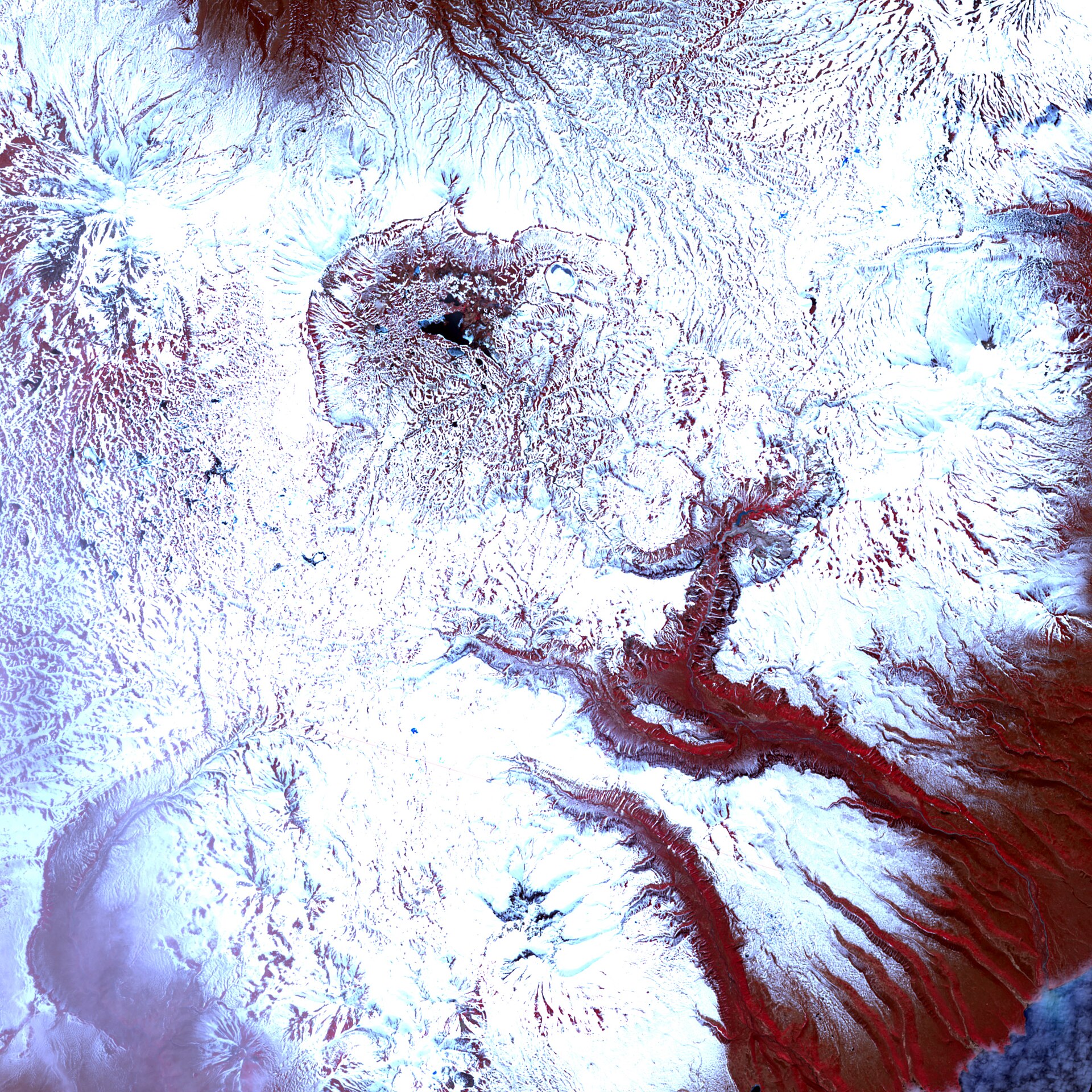
Volcanoes
Kamchatka sits where the Pacific plate goes under the Okhotsk plate at about eight centimetres a year. Everything else follows from that.
There are roughly 300 volcanoes on the peninsula and something between 29 and 32 of them are considered active, depending on who is counting and how far back they look. The subduction zone runs the length of the east coast, and the volcanic belt runs parallel to it, inland.
The ones you will hear about
| Volcano | Height | Last significant activity |
|---|---|---|
| Klyuchevskaya Sopka | 4,754 m | Frequent; ash columns most years |
| Kamen | 4,585 m | Extinct; collapsed eastern flank |
| Koryaksky | 3,456 m | 2008–2009 ash emission |
| Avachinsky | 2,741 m | 1991 lava plug |
| Tolbachik | 3,682 m | 2012–2013 fissure eruption |
| Mutnovsky | 2,322 m | Persistent fumarolic activity |
Avachinsky and Koryaksky
Two cones stand directly behind Petropavlovsk-Kamchatsky and are visible from most of the city on a clear day. Avachinsky is the usual first ascent for visitors: a long scree walk with about 1,600 metres of gain from the base camp, no technical ground, and a crater floor sealed by a lava plug left in 1991.
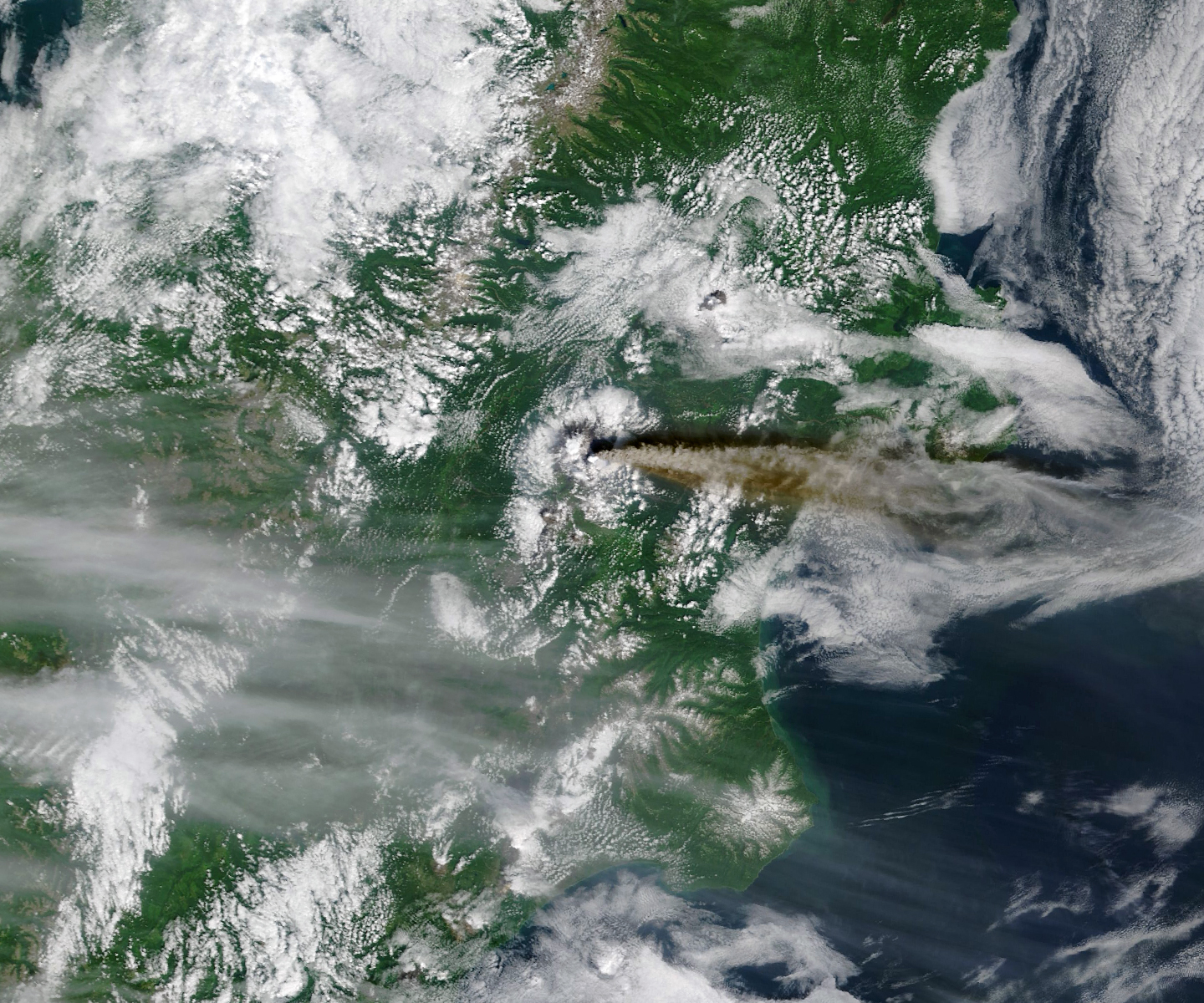
Tolbachik
The 1975–76 eruption here was one of the largest basaltic fissure eruptions of the twentieth century, and produced a dead forest of ash-buried larch that Soviet engineers used to test lunar rovers. The 2012 eruption reopened the fissure system further south.